
By Florencemary Nwabueze
Nigeria First Lady, Senator Oluremi Tinubu, has announced a N2billion personal intervention to revitalize the famed Akwete weaving industry in Abia State, promising to transform the centuries-old textile heritage into a globally competitive enterprise.
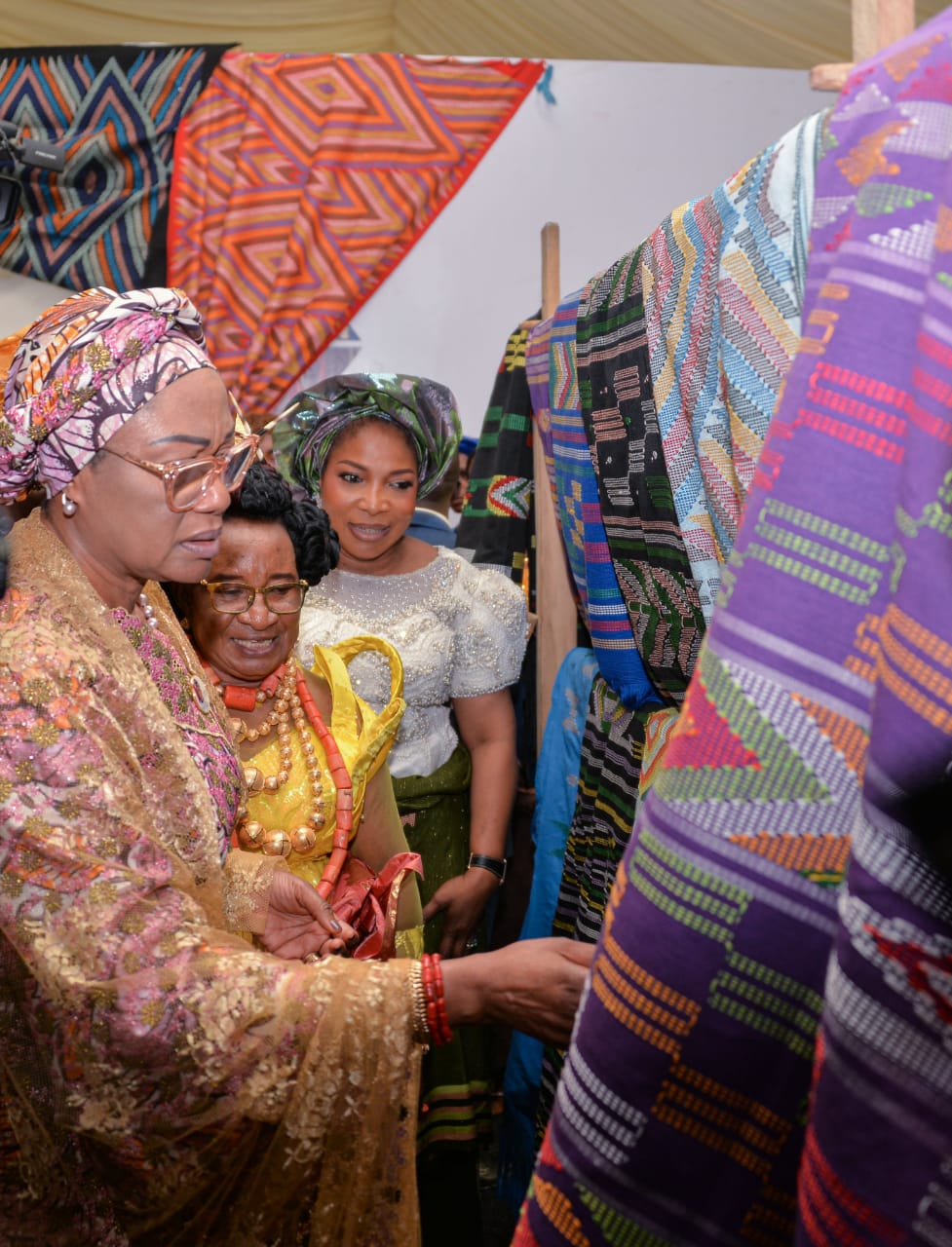
The First Lady made the pledge on Tuesday during an official civic engagement with members of the Akwete Weaving Cooperative Society in Akwete, Ukwa East Local Government Area, Abia State, where she witnessed live demonstrations of the traditional hand-weaving craft and inspected existing facilities.
The proposed intervention will fund the establishment of a modern production and research hub that will serve as both a manufacturing center and a training institute, preserving the ancient craft while integrating modern technology to expand its economic potential.
Declaring her support for the project, Oluremi urged Nigerians to embrace indigenous fabrics, insisting that Akwete cloth deserves national acceptance and international recognition.
"I am here to announce to all Nigerians that the Igbos should take Akwete to the nation. We all wear tie and dye from Yoruba land. We wear Aso Oke. Why not us wearing Akwete? It's a beautiful fabric," she said.
Addressing the cooperative members, the Oluremi disclosed: "On my own, I told the governor, I'm donating N2billion to the project. I don't know how you want to use it. The funds are not easy for me to give to you, and I believe the fund will be in good hands."
Oluremi revealed that her interest in Akwete cloth was sparked by a documentary she watched on the Nigerian Television Authority (NTA), initially believing the fabric originated from Ghana before discovering it was a treasured cultural product of Abia State—a revelation that inspired her visit to the community.
She described Akwete weaving as a priceless national heritage that must be protected and repositioned as a major cultural and economic asset, urging the women to preserve its authenticity while adapting it to meet contemporary fashion and industrial demands.
The governor of Abia state, Alex Otti, who welcomed the First Lady, revealed that the visit was entirely her initiative after she became fascinated by the Akwete weaving tradition.
"The truth is that you invited yourself. This is your initiative, and you followed up with us to ensure that this visit happened. I want to thank you," the governor said.
Otti disclosed that his administration had been working to reposition the Akwete textile industry since assuming office in 2023 by removing longstanding barriers that hindered its growth. He warned that unless the industry embraced innovation and technology, locally woven fabrics could lose market share to machine-produced imitations already flooding global markets from countries such as India and China.
The governor said the state had already developed a comprehensive blueprint for the sector and proposed a partnership with the First Lady to establish a world-class production and research hub for the women.
"We want to build a production hub for Akwete women in the cooperative society. We have been engaging with the industry since 2023 because we believe there is enormous potential in Akwete weaving," he said.
Governor Otti also commended President Bola Tinubu for implementing what he described as difficult but necessary economic reforms, including the removal of fuel subsidy and the floating of the naira, saying the policies had increased resources available to governments for infrastructure and development despite the temporary economic hardship.
The First Lady of Abia state, Mrs. Priscilla Otti, also described the First Lady's maiden visit as historic, saying it reflected her commitment to empowering women and promoting indigenous industries through the Renewed Hope Initiative.
She said the intervention would not only preserve one of the oldest textile traditions of the Igbo people but also create sustainable economic opportunities for women in the community.
In separate goodwill messages, former Minister of State for Mines and Steel Development, Dr. Uche Ogah, and the member representing Ukwa East/Ukwa West Federal Constituency, Hon. Chris Nkwonta, described the visit as a turning point for the Akwete weaving industry.
They called for increased investment, large-scale production, international marketing, and the establishment of a modern weaving and research center to ensure the survival of the craft and secure its place in the global textile market.
The high point of the ceremony was the conferment of the traditional title of "Ugonwanyi" on the Oluremi Tinubu by the Abia State Traditional Rulers Council in recognition of her support for the preservation and promotion of Akwete weaving.
The Akwete weaving tradition, which has been passed down through generations in the community, represents one of Nigeria's oldest textile heritage crafts and holds significant economic potential for women empowerment and cultural preservation.